Diaries 1996-2006
‘Reading a diary is like being offered an extra life.’
For over fifty years, Cees Nooteboom – the most internationally acclaimed Dutch writer – kept a diary. The first part, 'De danser en de monnik' ('The Dancer and the Monk'), written between 1970 and 1995, was released while Nooteboom was still alive. This second volume, is a posthumous publication following the writer’s passing this February aged 92.
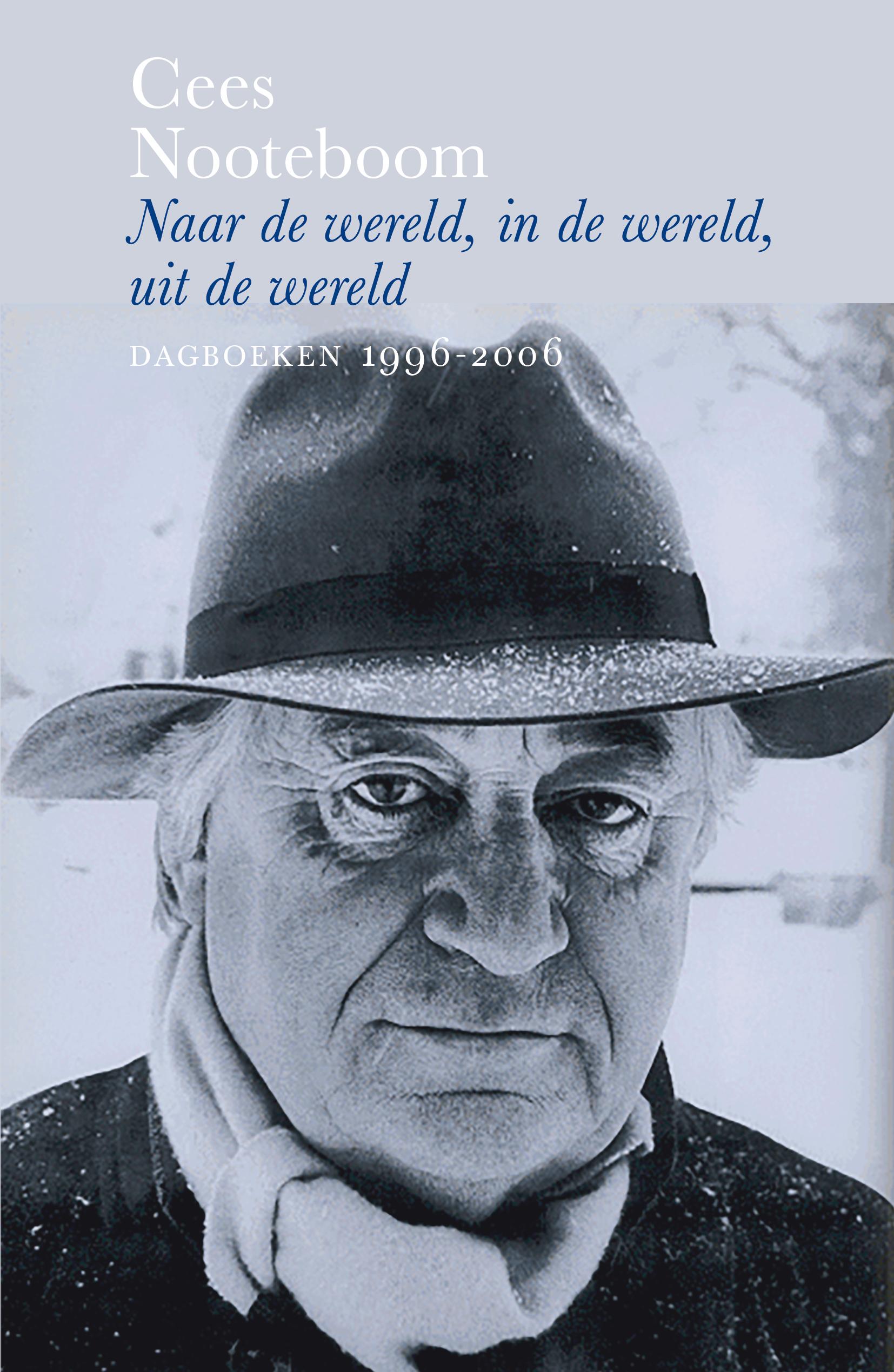
The first part of his Diaries sees Nooteboom achieve his literary breakthrough following the publication of his novel Rituals. This new part covers the ‘richest’ period of his life in an intellectual, literary and emotional sense. He is at the height of his fame, inundated by requests from across the globe to give lectures and present translations of his work. He travelled to innumerable places around the globe, splitting his time at home between Amsterdam and the Spanish island of Menorca. His wanderlust, and his restlessness, are illustrated by enumerations such as: ‘Paris. Let me try to remember: Roermond, Hasselt, Liège, Düsseldorf, Amsterdam, Innsbruck, Munich, Budapest, Amsterdam, Munich, Berlin, Bad Segeberg, Amsterdam, Paris. And in between, Kyoto and Tokyo – all in five weeks.’
This second part goes further than the first, revealing the course of his writing career, his beliefs, his dedication, his insecurities, and what he himself called his ‘tentative, pointillist’ approach to writing. It contains superb observations on the need for fictional works, without which we cannot fully grasp the facts. We share in the genesis of his major novel All Souls’Day set in post-wall Berlin which he wrote while traveling the world. He gives vent to his disappointment about its initially rather lukewarm reception. He is remarkably open about his sensitivity to criticism in general. But above all his triumph is palpable. This is his heyday. The years in which he enjoyed major international recognition, and became an esteemed European writer, being awarded countless prizes, including the European poetry prize in Italy and the long-awaited Dutch oeuvre prize, the P.C. Hooftprijs. But these years are also marked by emotional ups and downs, in terms of love, fidelity and infidelity, and the illness and death of dear friends. These experiences also make him increasingly aware of his own advancing years.