River of Blood: A Cultural History of the Volga
Krielaars reveals the bloody chapters of Russia’s history and how their effects extend into the present
Of late Michel Krielaar, an authority on Russia, felt the country he thought he knew was gradually slipping away from him. Following Russia’s invasion of Ukraine, he felt compelled to return to the past to find answers. Twelve years ago, Krielaars travelled to the source of the Volga, following the 3,500-kilometre course of the river to the Caspian Sea. He recently made the journey again.
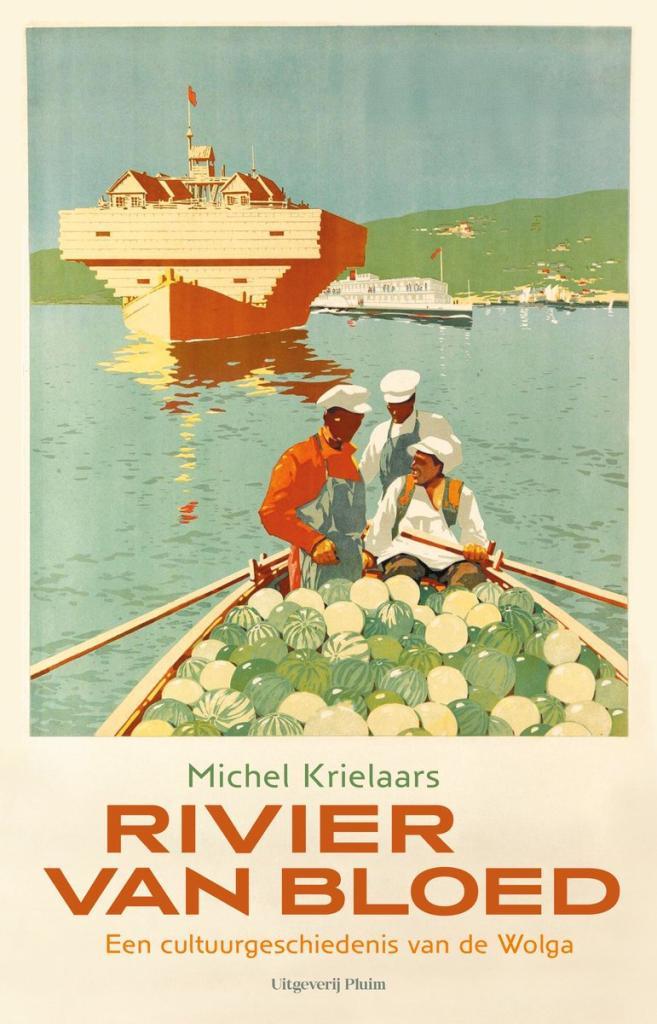
Michel Krielaars’ in-depth exploration of Russia takes him across and along the Volga, the soul of the country, the source of ideas and myths that have moulded modern Russia: an imperial power that has never been able to accept the 1992 collapse of the Soviet Union.
Drawing on a myriad of accounts from local people, Krielaars reveals the past origins of today’s Russia and the number of historical parallels with Putin’s ongoing reign of terror.
But as this biography attempts to understand the country at a deeper level, it is also simply an exciting tale of the huge Volga river. It offers evocative descriptions of Ivan the Terrible’s purges. Draped in black habits and with severed dogs’ heads attached to their saddles, Ivan’s state police carried out terror raids on horseback, sacking and raping the noble classes that they sought to control.
River of Blood is not only a fascinating story of Russia’s violent history, but it also helps to understand the current state of geopolitics. Krielaars paints a picture of a broken people. One of his main conclusions is that Russia refuses to come to terms with its past – Russians suffer from illusions of grandeur coupled with an inferiority complex. The author’s takeaways go far in explaining and understanding the problems of Putin’s totalitarian Russia.
Krielaars’ latest book tells the story of the country’s origins, its national identity and its political mythology.
As a former correspondent and authority on Russia, Krielaars is uniquely placed to comment on the state of the country.
Press reviews of his previous book The Sound of Utopia
Through Stalin’s cold winter, the masterly Krielaars manages to find the faint echoes of something song-like, emerging from the silence, calling out for glasnost.
Trouw
Krielaars gives a colourful account of modern Russia and possesses a profound knowledge of the country’s culture.
NRC
Ten cradle-to-grave pen-portraits of Stalin’s musicians, told with bantering brio… Krielaars has done an admirable job rescuing his lesser-known subjects from obscurity.
Financial Times
Ten cradle-to-grave pen-portraits of Stalin’s musicians, told with bantering brio… Krielaars has done an admirable job rescuing his lesser-known subjects from obscurity.
The Times
.jpg&w=640&q=75)