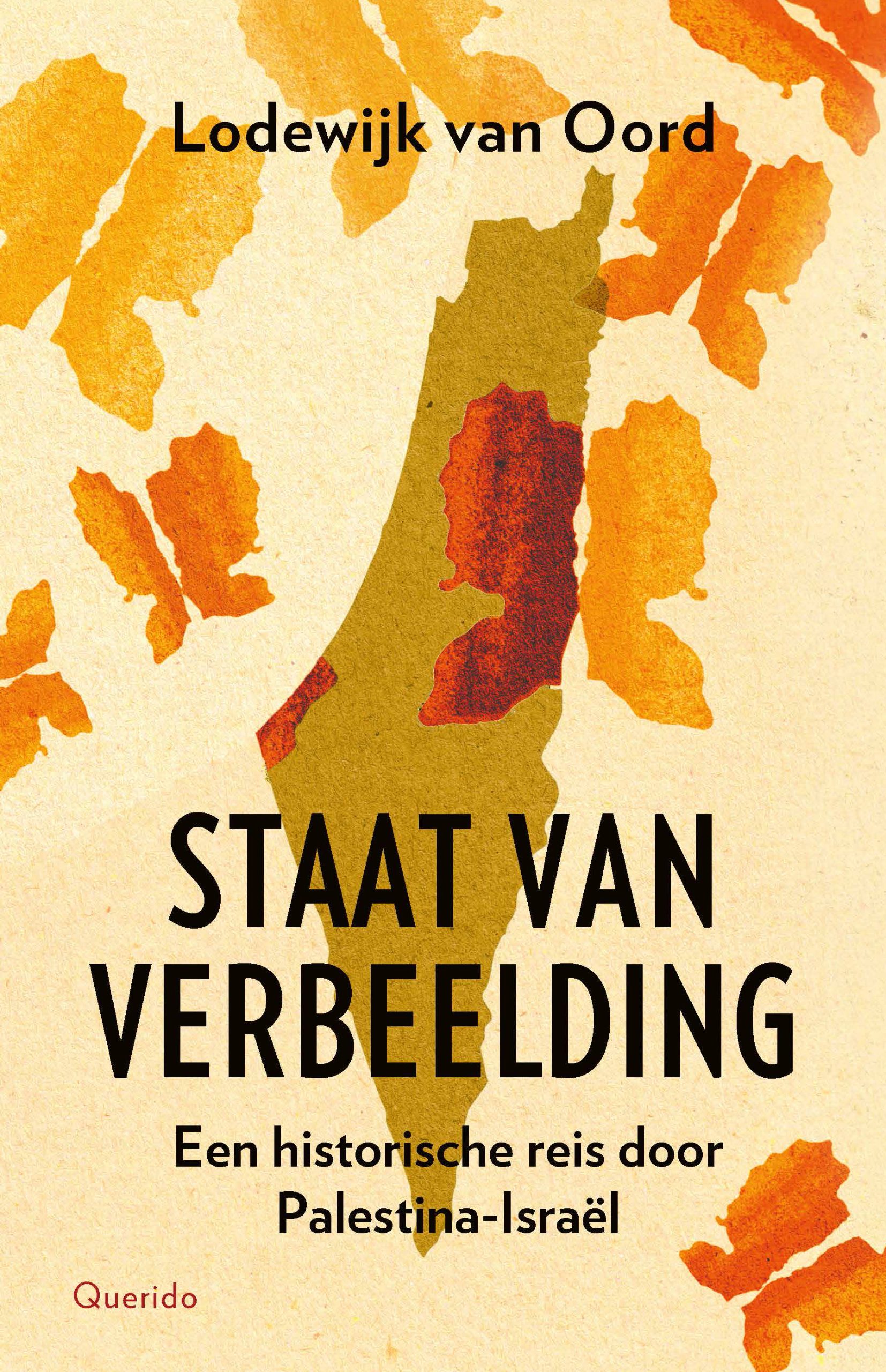
State of Imagination: A Historical Journey through Palestine-Israel
Narrative history at its best: superbly written, captivating, thrilling, personal, erudite and original. Amidst all the tragedy, Van Oord offers hope for a just solution to the intractable Israeli-Palestinian conflict.
The history of Palestinians and Israelis, of Jews and Arabs, over the past century is one of hope, struggle and tragedy of epic proportions. This is the perspective from which Lodewijk van Oord describes that history in his accomplished work State of Imagination. To understand the root causes of the violence in Gaza and the Westbank it is essential to examine the deep origins of the conflict. Van Oord, an incredibly widely read and knowledgeable historian as well as a born storyteller, spent eighteen years conducting research, collecting documents, engaging in dialogue and travelling. He believes that history is predominantly a sum of the stories people tell each other. And he is one of those story tellers. Reality is therefore an imagined construct, as captured so fittingly by the title of the book.
State of Imagination is by and large a chronological history, beginning in the mid-nineteenth century in Europe where he locates the origin of the conflict. As the history unfolds, Van Oord introduces the thoughts of various contemporary and historical figures. He places particular emphasis on core myths that he attempts to demystify while also showing that myths are part of social reality. These myths offer an explanation and rationale for human behaviour and are a major driving force behind the long-term conflict in the Middle East.
State of Imagination is a thorough, incisive and original study that is not only written in an extraordinarily fluid and gripping style, but also offers hope in the face of tragedy: the imagination can be put to work again to find a just solution.
Lodewijk van Oord (Madrid, 1977) is a historian and writer. He taught Middle Eastern history and conflict studies for many years. His work took him on many trips through Israel and Palestine. He is the author of several novels. His critically acclaimed and widely read Protesting, a course for beginners, an essay on resistance and rebellion, was published last year.