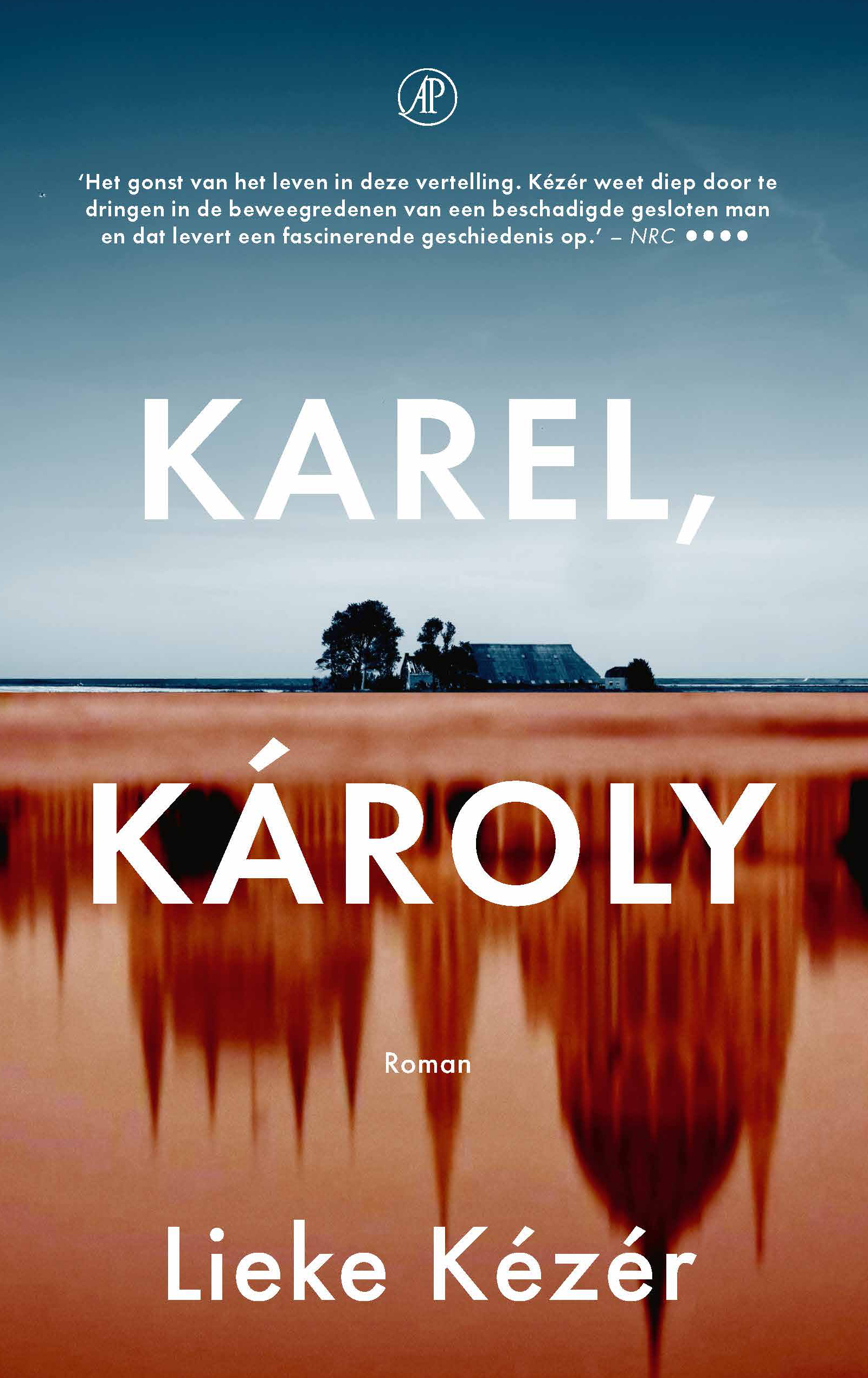
Karel, Károly
The story of a Hungarian boy who came alone to the Netherlands and never went home
In February 1920, Anna puts her eleven-year-old son Károly on a train to the Netherlands. He is one of almost 30,000 Hungarian children who, after the collapse of the Austro-Hungarian empire, were sent to The Netherlands to recover from the hardships of war. His stay is meant to last three months, but Károly, taken in by a farming family in Brabant, never leaves. He is given a new name: Karel.
The story is told through his own eyes and those of the people closest to him: his mother, the man who took him in, and his wife. When he meets his future wife Edie at a horse market, years after his arrival, she says: 'I know who you are. You're the Hungarian.' 'I'm a farmer,' he replies. 'A farmer who'd like to have coffee with you tomorrow.'
In 1938 he returns to Hungary to collect the birth certificate he needs for the wedding – the last time he will see his family. During the Second World War, he hides a Jewish family on his farm. About his childhood and the family he left behind, he never speaks. Only at the end of his life, when seriously ill, is he honoured by Yad Vashem as Righteous Among the Nations.
Kézér's meticulous prose never rushes, letting the great events of history – the collapse of an empire, war and resistance – take shape in the ordinary moments of a life.
Based on the life of the author's grandfather, Karel Kézér, who came to the Netherlands on one of the Hungarian children's trains in 1920
Third novel by Lieke Kézér, whose debut De afwezigen (The Absent, 2016) won the ANV Debutantenprijs and De Bronzen Uil for best Dutch-language debut
Lieke Kézér (1976) is a writer, journalist and critic for Trouw. She studied film and television. Her debut novel De afwezigen (2016) won the ANV Debutantenprijs and De Bronzen Uil; her second novel, De verloren berg (The Lost Mountain), followed in 2019. Karel, Károly is based on the life of her grandfather, who died nine days before she was born.