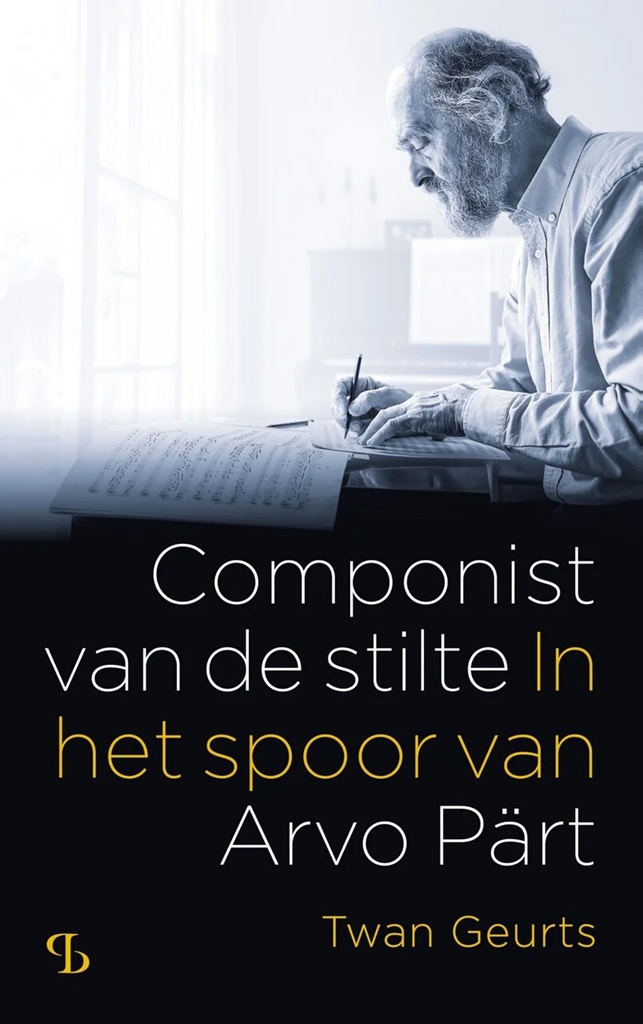
Arvo Pärt, The Composer of Silence: A Biography
A fascinating biographical reportage of one of the world’s greatest living composers
At any given moment, someone, somewhere, is performing the music of Arvo Pärt and his world-famous compositions, be it Spiegel im Spiegel, Fratres or Tabula rasa. Pärt’s compositions and their alleged simplicity move millions around the globe. But who is Arvo Pärt? What is his life story? And what is the secret of his genius?
Twan Geurts shares his longstanding fascination with Arvo Pärt’s work and life as he takes the reader on a journey to the composer’s home country of Estonia, searching for answers and exploring Pärt’s unique musical language: Tintinnabuli. Geurts visits Estonia and the places that shaped Pärt’s life, he writes about the period during which the composer’s religious compositions were banned by the Communist authorities as well as his emigration to the West with his wife and children. Pärt has since returned to his homeland.
The author attends concerts of Pärt’s pieces in various countries and speaks to musicians including Daniel Reuss, Gidon Kremer and Paul Hillier, with whom Pärt experienced his world premieres. He also follows young performers who have been inspired by Pärt. The Composer of Silence illuminates the life and work of this unique composer, highlighting the fundamental role of silence in his music.
Geurts travelled to Estonia to speak with colleagues and those who know Pärt personally. His book represents a deep exploration of the 90-year-old composer’s world.
The book sheds light on the challenges Pärt part faced while living in the Soviet Union, his emigration and his return to Estonia.
An artful mix of history, musicology and artist’s biography
Twan Geurts (1950) writes about religion, music and culture. His previous published works include Engelen van deze tijd, Rolduc (Contenporary Angels. The story of the abbey Rolduc) (nominated for the prestigious M.J. Busseprijs nonfiction prize 2012) and The Dutch Pope (2022).